Spoken languages: Portuguese is the official language, but English is commonly spoken along the coast.
Local customs: Respect the traditional siesta hours between 1 pm and 3 pm when smaller shops might close; dining is a leisurely affair and often starts late, around 8 or 9 pm. There is no strict rule for tipping, which is not really a Portuguese custom; however, in a café, restaurant, or for taxis, it’s customary to round up the bill to the nearest euro or, for larger amounts, the nearest note.
Currency: Portugal uses the Euro. ATMs are easy to find, and most establishments accept major credit cards. For smaller purchases in markets or cafés, having some cash handy is a good idea.
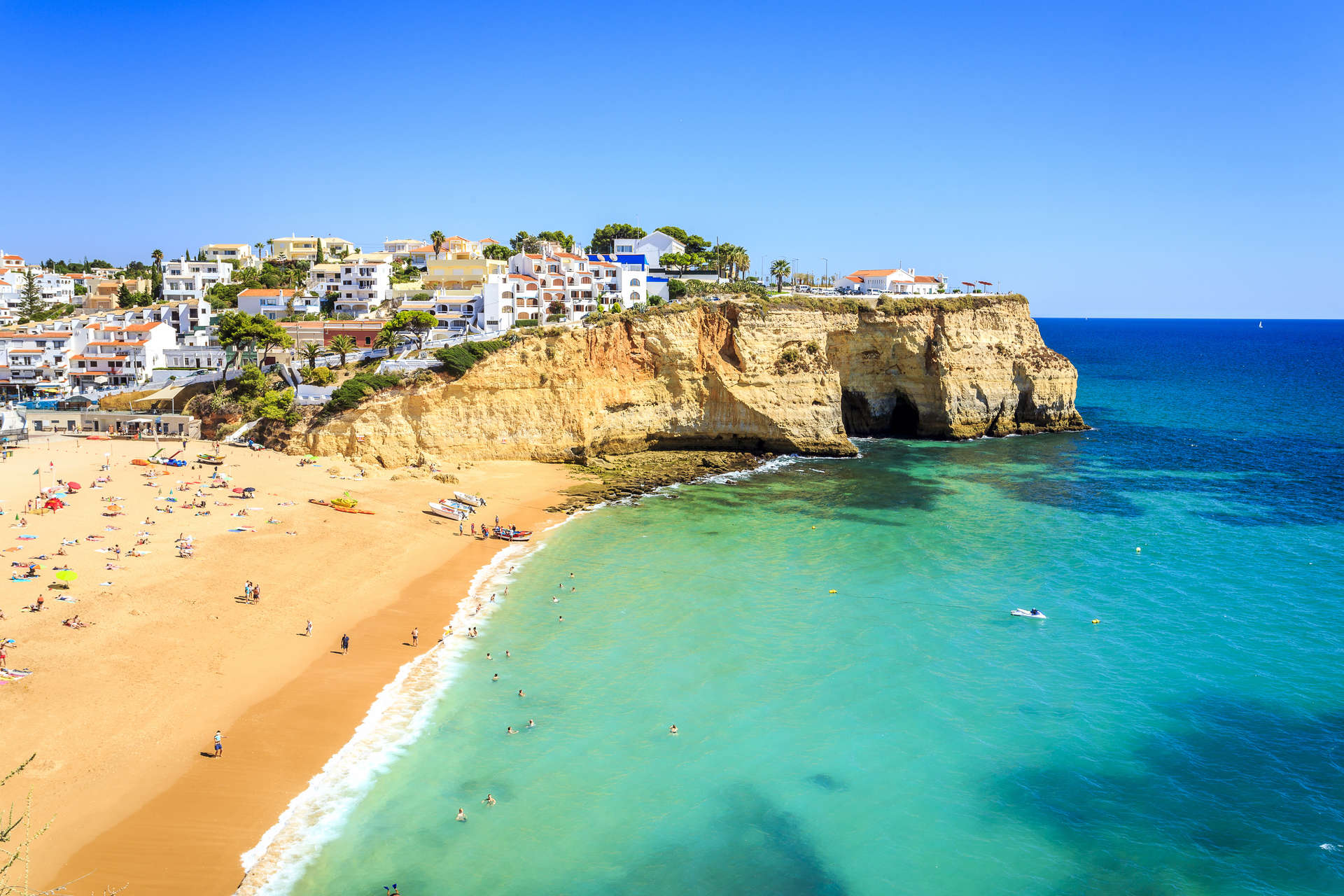
Getting around: Carvoeiro is small and easy to navigate on foot. For nearby beaches and attractions, buses connect major towns and cost around $1.60-$3.20 per journey. Taxis and car rentals are popular options for exploring further afield, with rental cars starting at around $32 per day.
Electricity and plug types: Portugal uses the standard continental 220 volts, and travelers from the US will need a two-pin adapter for their devices.
Time zone: Carvoeiro is in Western European Time (WET), which is 5 hours ahead of Eastern Standard Time (EST). Daylight Saving Time is observed, so clocks move forward by an hour in summer.
Required travel documentation: US travelers do not need a visa for Portugal for stays of up to 90 days, but a valid passport is essential.